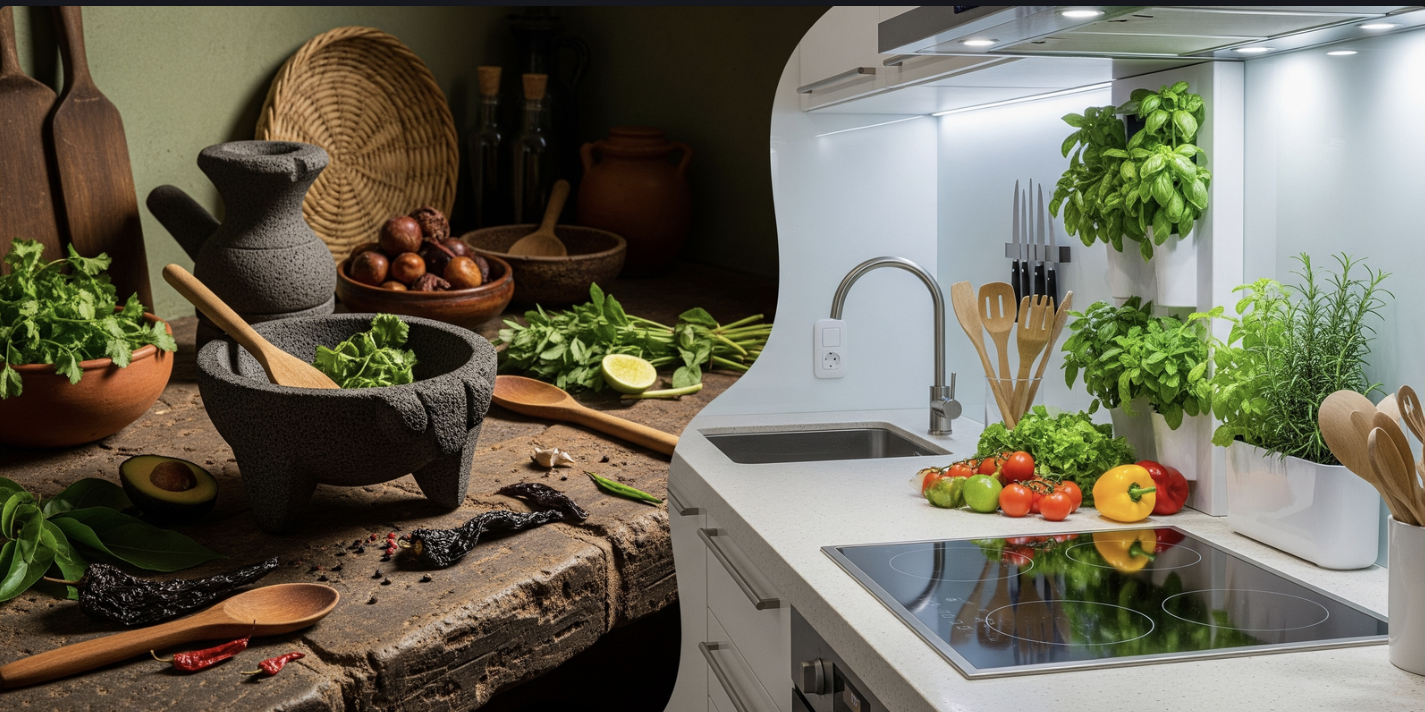
La comida es una memoria, you can taste.
Las recetas matter. But the person, the story, and the moment behind them matter too.
Eso platillo are not just dishes. Es ese olor de la cocina, before everyone woke up. Esa mano that never measured. Esa receta nobody wrote down. The person you are still trying to find again through taste.
This page is esa historias del sabor de la cocina, esa memoria of cultural reconnection, and the ways we carry people forward through what we make now. Esa tradicion vive aquí, pero so does change. You are allowed to adapt. You are allowed to remember imperfectly. You are allowed to start with what you still have.
How does Spanglish Culture connect food, identity, and memory?
Food here is not just recipes. It is memory, grief, identity, and family history. We use food stories to explore belonging, culture, and what gets passed down.
¿También estás creating? If you make content about food, cultura, or identity — and you are doing it bilingually — these tools were made for the way you work.