Stories from the in between.
Real stories about language, food, familia, work, memorias, y esos momentos that make bicultural life feel heavy, funny, tender, and real.
These are not listicles. These are not cultural takes written from a la distancia. Estos son stories que comienzan with ese momento you recognize and stay long enough to tell the truth.
Quizas fue la primera vez someone made you feel like your Spanish was not enough. Eso años you spent translating for people who were supposed to be protecting you. Ese platillo that tastes like someone you miss. The version of yourself you take to work and the one que se queda en la casa
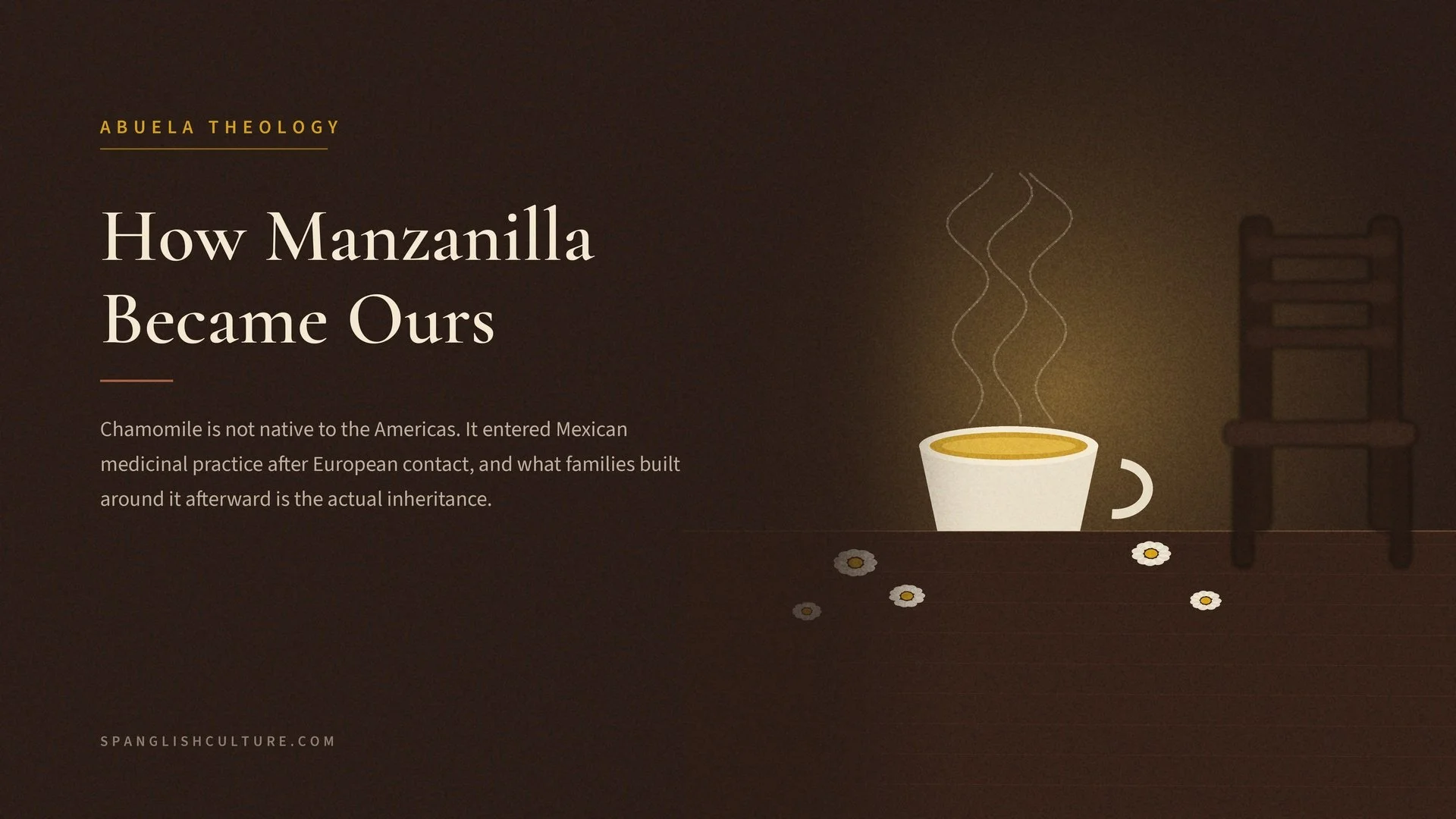
How Manzanilla Became Ours
The tea we hold as the most ancestral thing in the cupboard is a plant from somewhere else. What happened after it arrived is the part worth inheriting.
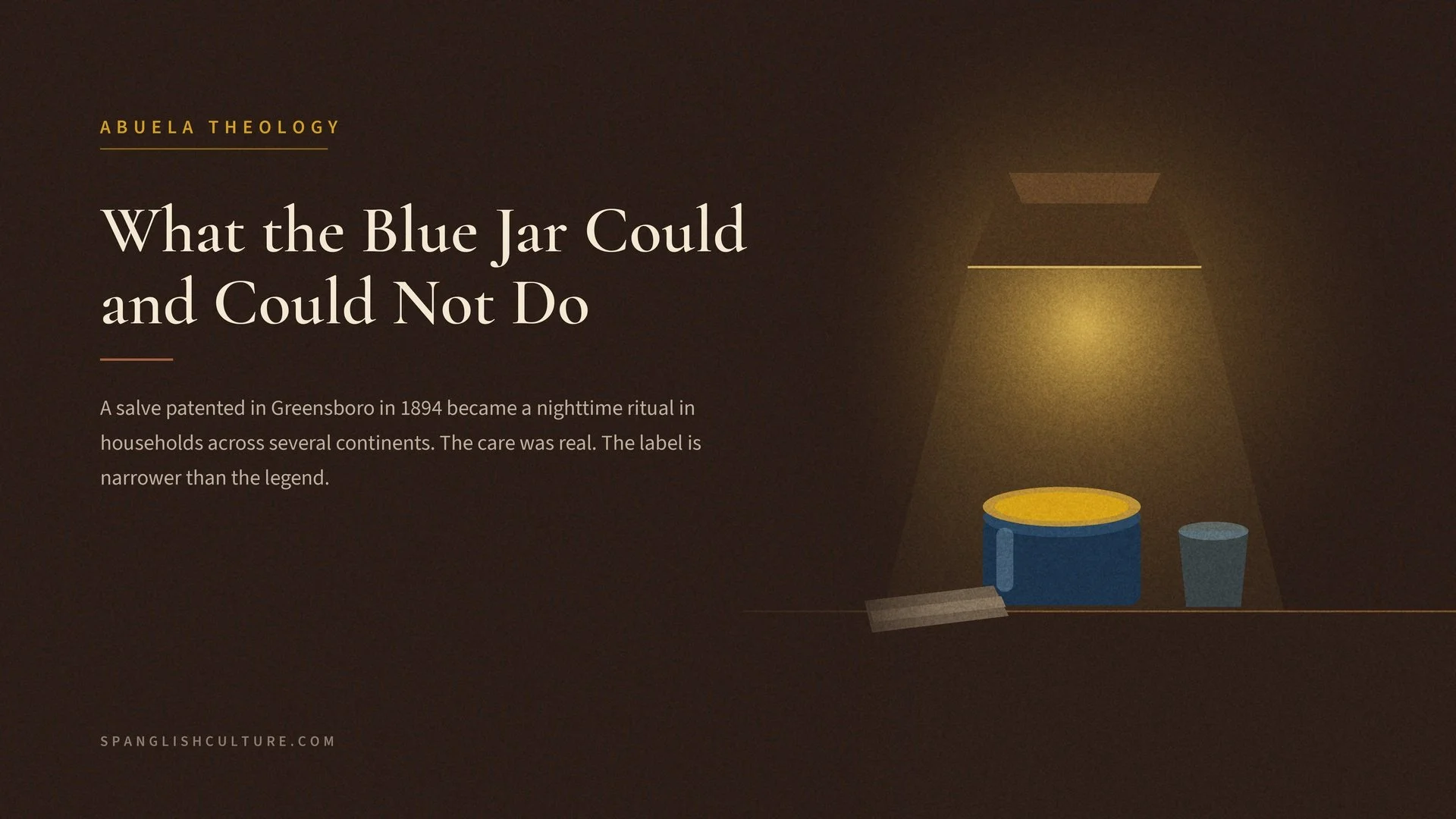
What the Blue Jar Could and Could Not Do
Nobody in that room was thinking about pharmacology. Somebody was thinking: stay here, I have you, sleep. Both of those things deserve an honest accounting.

Clean Had a Smell
For a lot of households, clean had a color, and the color was purple. The smell was real. What it proved is a different question.
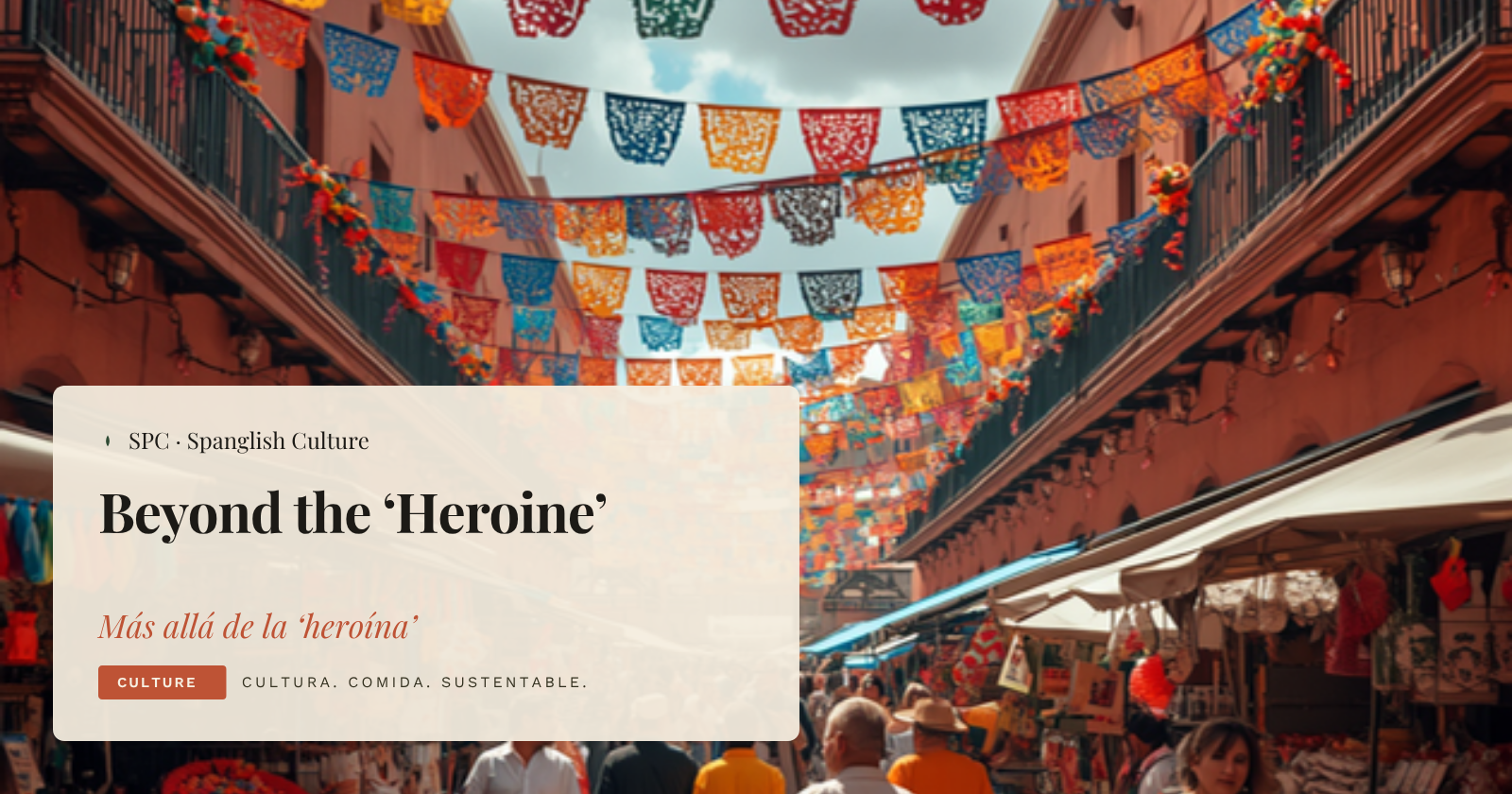
Beyond the ‘Heroine’: The Women Who Made Mexican Independence Possible
If your Mexican Independence story has only a few famous men plus two “heroines,” widen the frame. Women were couriers, financiers, organizers, informants, recruiters and combatants—and later memory did not preserve all of them equally.
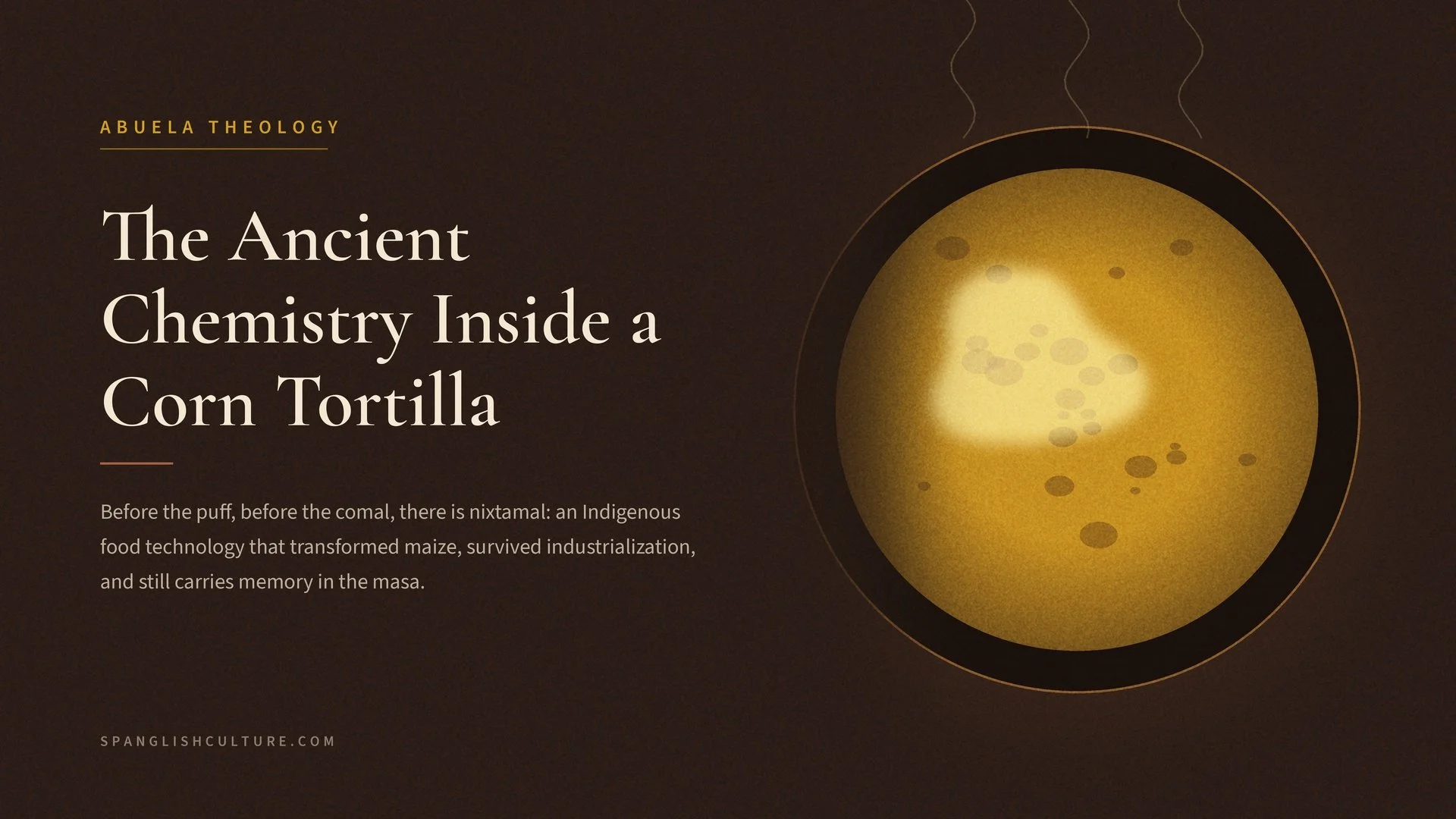
The Ancient Chemistry Inside a Corn Tortilla
A corn tortilla is not simple food. It carries Indigenous food science, women’s labor, regional history, industrial change, and the knowledge of hands that rarely needed a written recipe.
Why Food Belongs in Fiestas Patrias: Cuisine, Memory, and Mexican Identity
Fiestas Patrias food is not just a red-white-green styling opportunity. Mexican food historians show that cuisine itself helped build ideas of mexicanidad—while real family kitchens kept regional and migrant differences alive.
What Did Hidalgo Actually Say? History, Memory, and the Making of El Grito
What did Hidalgo actually say? The strongest answer separates early testimony, later reconstruction, and commemorative tradition. History gets better when we label the evidence.
Josefa Ortiz and the Information Network Behind the Insurgency
Josefa Ortiz’s story is not only “brave woman warned Hidalgo.” It is a story about political networks, information, trust, and what happens when a plan is compromised.
1810 Was the Beginning, Not the Finish: Mexico’s Eleven-Year Independence Struggle
1810 starts the story. 1821 changes the ending. Mexican Independence was not one night—it was eleven years of insurgency, political change, defeat, survival and negotiation.
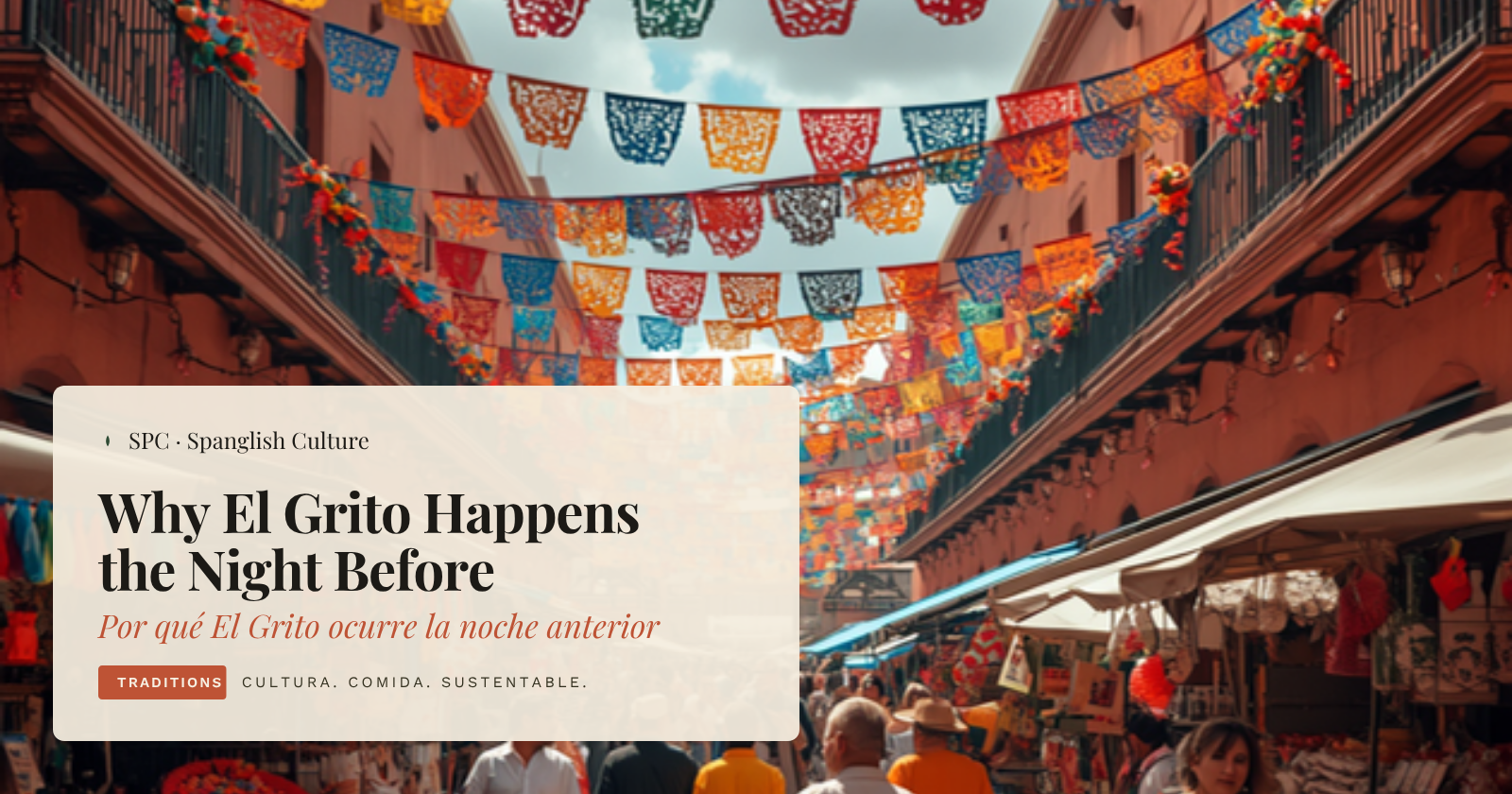
Why El Grito Happens on September 15 When Independence Day Is September 16
Night of Sept. 15: El Grito. Sept. 16: Independence Day. The reason is not a calendar mistake—it is the history of how a national ritual formed over generations.
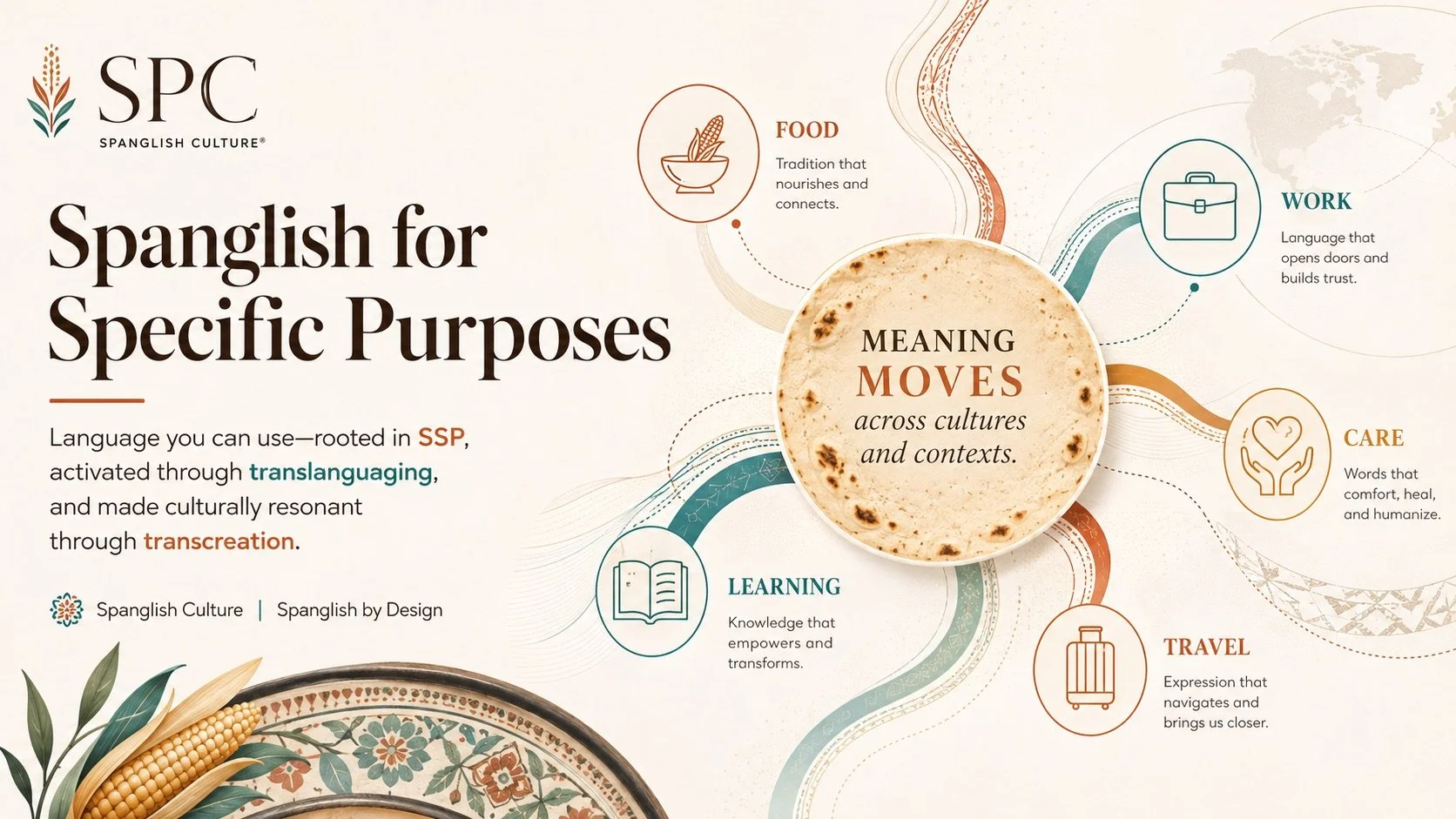
Spanglish for Specific Purposes
Spanglish is not broken Spanish—and mixing languages is not automatically good communication. SFSP is a practical framework for choosing, signaling, and repairing meaning across work, education, healthcare, travel, family, and food.
Cinco de Mayo Is Not Mexican Independence Day — and the Difference Matters
Quick correction before September: Mexican Independence Day is September 16. Cinco de Mayo is the 1862 Battle of Puebla. But the U.S. story is richer than a simple mistake—California Latinos were commemorating Puebla during the Civil War era. Different histories. Both worth knowing.
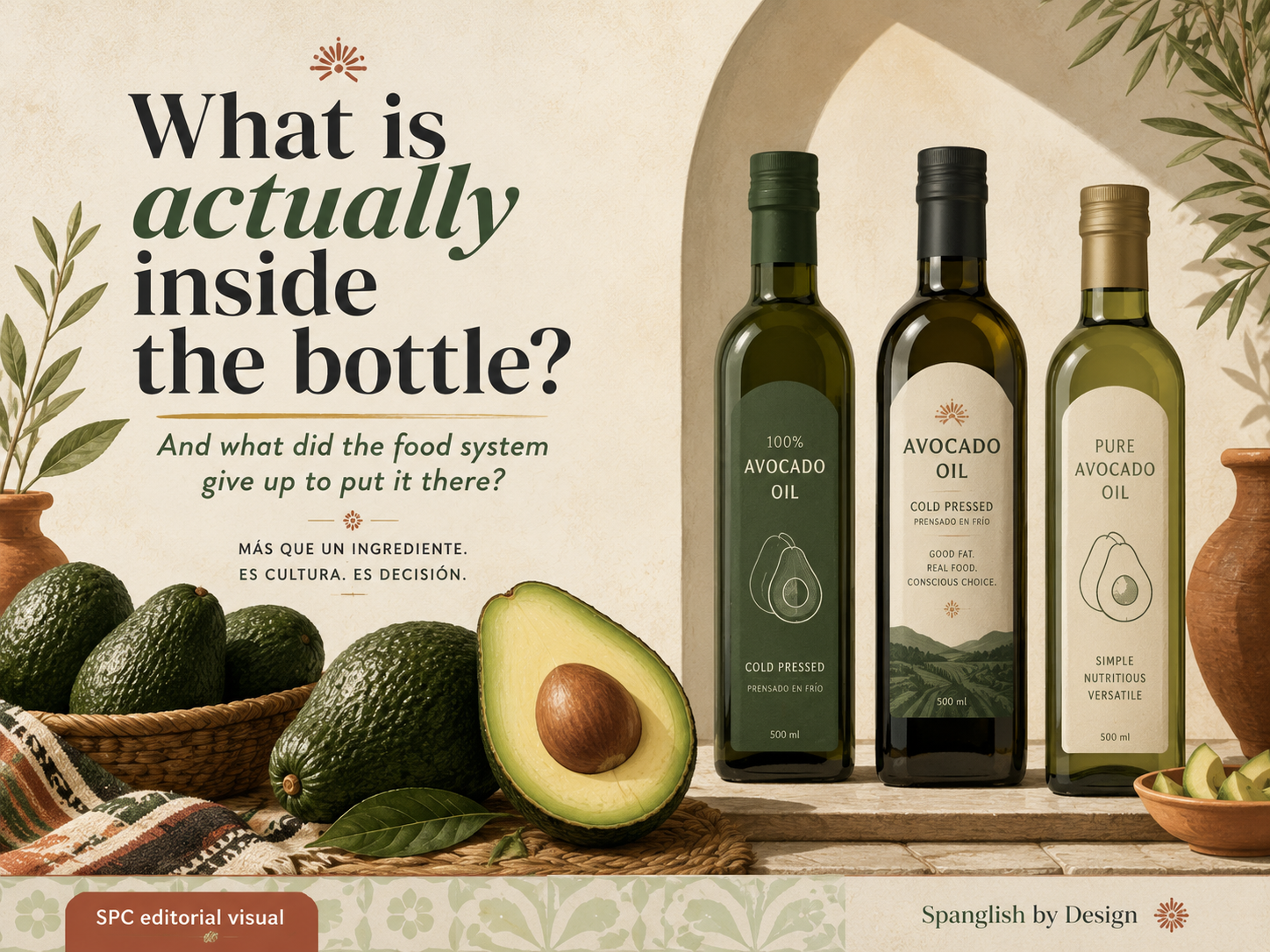
Nature Already Packaged Avocado Oil
Before oil came el aguacate. It wasn’t born as a wellness trend. People in Central America grew and bred avocados for thousands of years.
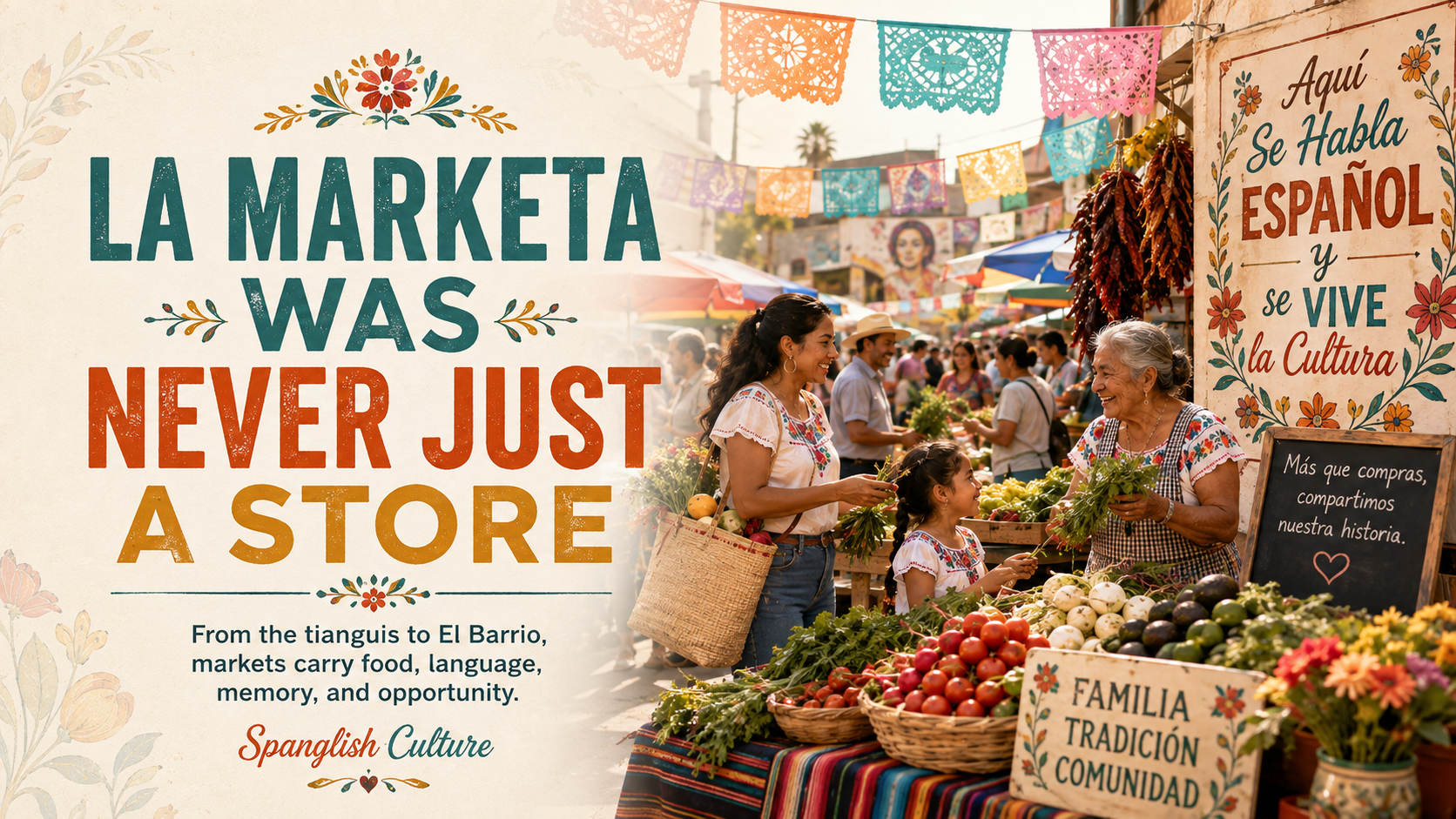
La Marketa Was Never Just a Store
You hear the market before you see all of it. The vendors, the produce, the questions moving between English and Spanish. From the tianguis to El Barrio, markets have carried more than food—they have carried memory, work, language, and belonging. That marketplace logic inspired La Marketa by Spanglish Culture.
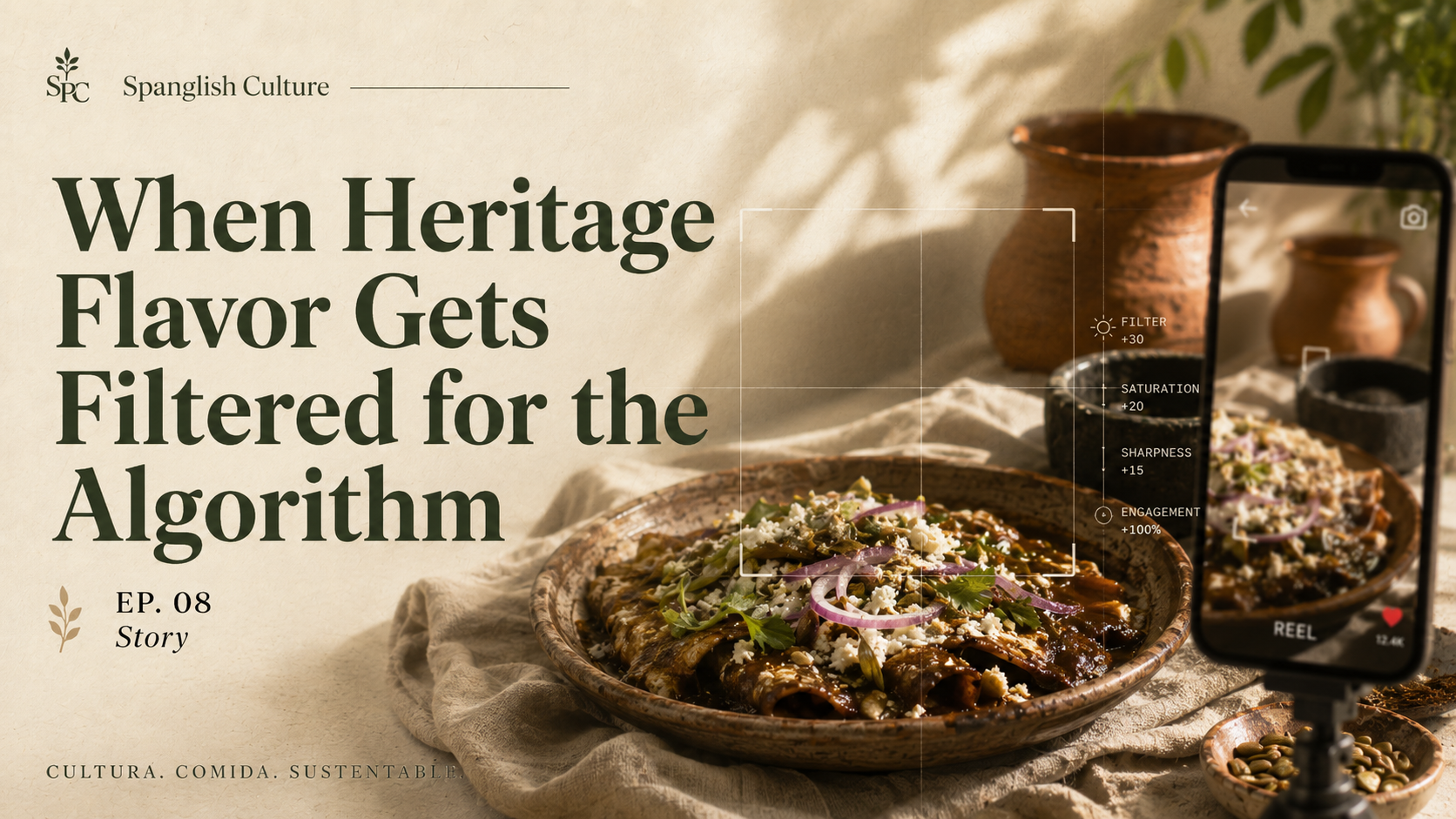
When Heritage Flavor Gets Filtered for the Algorithm
Viral food can make a dish visible while stripping away the people, labor, language, and memory that made it matter.