La Marketa Was Never Just a Store
From the tianguis to El Barrio, markets have carried food, language, memory, and opportunity. La Marketa by Spanglish Culture was built in that spirit.
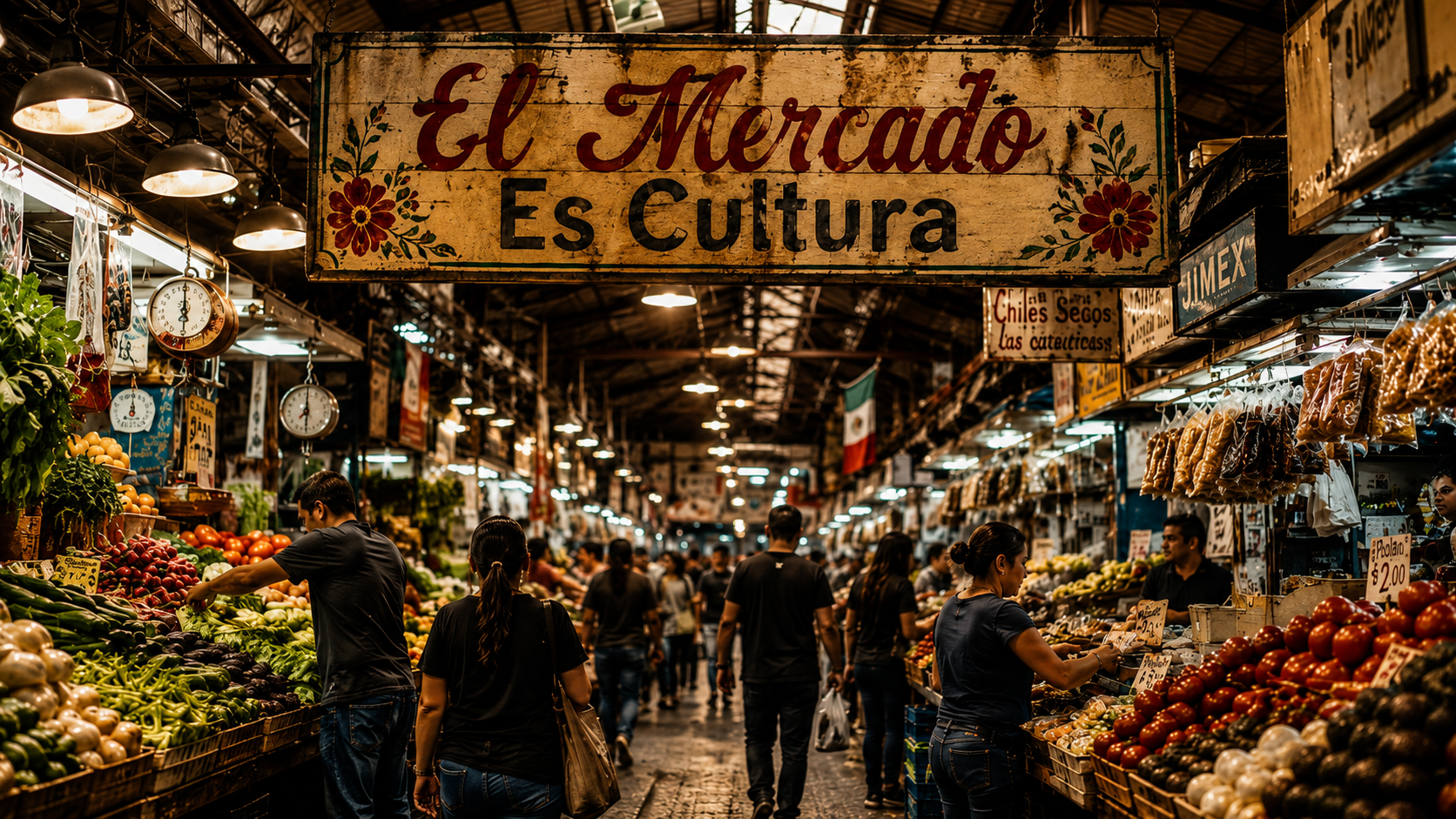
A market becomes cultural when food, knowledge, language, work, and relationships move through the same space.
You hear the market before you see all of it.
A vendor calling across the aisle. The slap of a cardboard box opening. Someone asking, “¿A Cuánto?” while their child answers another question in English. Cilantro wet from the morning spray. Chiles stacked beside mangoes. Pan dulce, cooking oil, paper goods, canvas bags, music from somebody’s phone.
And then there is the conversation.
The vendor already knows what you came for. Somebody tells you which fruit is ready today and which one needs two more days on the counter. A woman you have never met explains how her mother cooked the ingredient in your hand. Two people stop in the middle of the aisle because they recognize the same last name.
You went for the tomates.
Pero, you also found out who had arrived from back home, whose daughter was looking for work, where to get the right chile, and how somebody’s abuela prepared it without ever measuring a thing.
A supermarket may sell many of the same ingredients. What it does not automatically hold are the same relationships.
That is the difference between a place that sells things and a market that becomes part of a culture.
Y ahí está el punto: you came for tomatoes, pero the market handed you context.
Before the mercado, there was the tianquiztli
The word tianguis comes from the Nahuatl tianquiztli: market.
Long before Spanish colonization, Mesoamerican communities organized designated places for exchanging goods and services. These were not random piles of merchandise. Markets had rules, authorities, systems of measurement, and consequences for cheating. Some gathered on designated days. Others became large, specialized centers connecting producers, craftspeople, traders, and households across regions.
Food moved through those spaces, claro. So did tools, textiles, seeds, medicine, information, and skill.
Think about that for a second.
An ingredient never travels alone. It carries the knowledge of when to harvest it, how to judge it, how to preserve it, what to pair it with, and who taught you to use it. A tool carries technique. A seed carries a season. A recipe travels through conversation before anybody thinks to write it down.
The market was never only where culture was displayed.
It was one of the places where culture kept working.
That does not mean every market was equal, peaceful, or romantic. Markets were regulated spaces shaped by power, access, labor, and survival. But that is precisely why they mattered. They helped organize everyday life.
People did not only enter as consumers. They arrived as growers, makers, cooks, carriers of news, employers, apprentices, neighbors, and relatives.
The transaction was part of the story. It was not the whole story.
What crossed the border was more than food
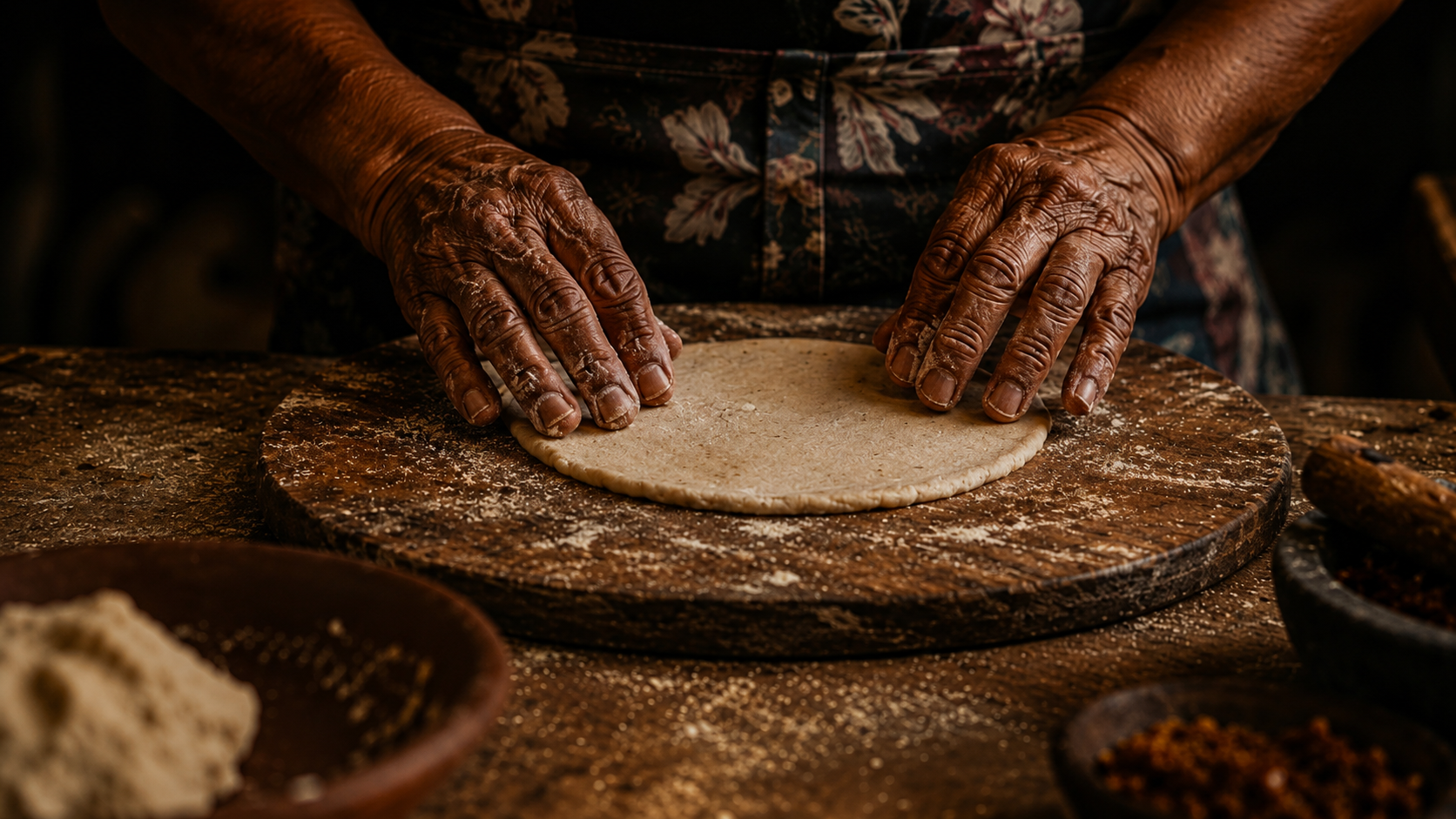
An ingredient never travels alone. It carries technique, memory, and the hands that taught us what to do with it.
When people migrate, they cannot always bring the physical market with them.
They may leave behind the plaza, the weekly rhythm, the vendor who knew the family, the exact variety of chile, the familiar way prices were called out. But people carry the market’s social function wherever they can rebuild it.
They search for ingredients that taste like home.
They tell a newcomer where work might be available. They explain which train to take, which office has the right form, which butcher understands the cut they need. They share news from a hometown, pass along a room for rent, recommend a doctor, correct a rumor, offer a little credit, or simply create a place where nobody has to explain why that particular food matters.
O sea, people do not only rebuild commerce.
They rebuild recognition.
Una recomendación, a familiar accent, somebody who understands before you finish—and suddenly the city feels a little less ajena.
That matters in migration because displacement does not happen only across geography. It also happens across language, class, institutions, and everyday routines. A person can find the correct ingredient in a new city and still feel far from home. But when the vendor pronounces it the same way your family does—or understands what you mean before you finish the sentence—the distance changes.
The market becomes a kind of portable community architecture.
Not perfect. Not frozen in time. But familiar enough to help people begin again.
La Marqueta: when a community renamed the market
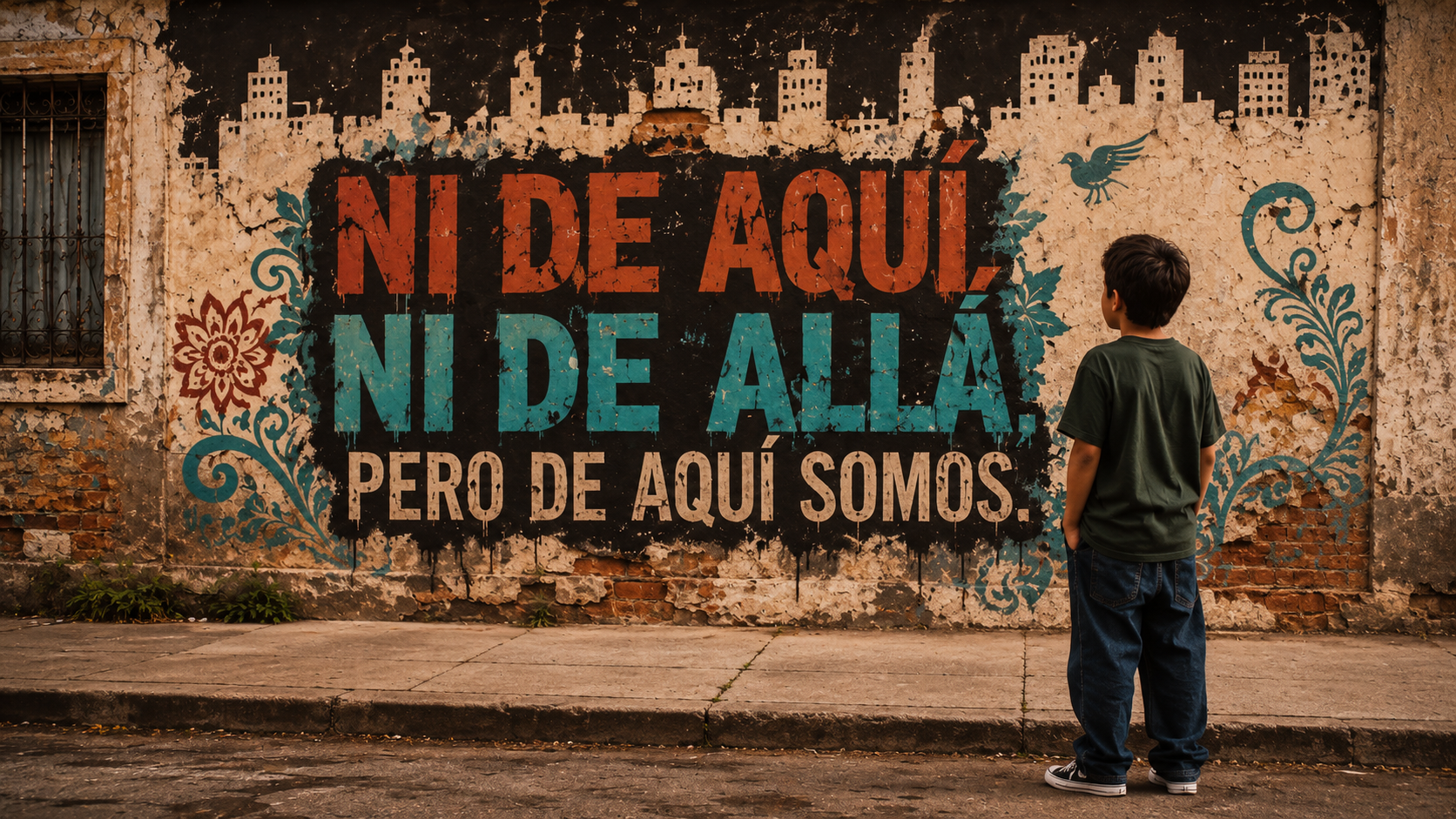
Migration changes the geography. Recognition helps rebuild belonging.
You can see that process in East Harlem.
New York City opened the Park Avenue Retail Market in 1936 beneath the elevated rail tracks. The market gave East Harlem’s pushcart vendors—many of them Jewish and Italian—a permanent place to operate while expanding working-class access to fresh food.
Then the neighborhood changed.
Puerto Rican migration reshaped East Harlem after World War II, followed by other Caribbean and Latin American communities. The market changed with the people around it. Vendors learned Spanish. Product selections shifted toward Caribbean kitchens. People traveled from other parts of the city for ingredients they could not easily find elsewhere.
And the Park Avenue Retail Market became known as La Marqueta.
That change in name matters.
The community did more than translate the word market. It made a municipal institution linguistically and culturally legible to the people who used it.
“Park Avenue Retail Market” described what the city built.
“La Marqueta” described what the community made of it.
At its height in the 1950s and 1960s, the market held hundreds of vendors. But the numbers alone do not explain why people remember it. Historical accounts describe La Marqueta as the center of neighborhood life—a Saturday meeting place where shoppers exchanged gossip, family announcements, migration news, and job leads alongside bacalao, plantains, herbs, clothing, and household goods.
You might arrive looking for food and leave knowing who got married, who had a baby, who was arriving from Puerto Rico, and who knew somebody hiring.
That right there is the cultural market.
It is commerce, yes. Pero it is also a communication system, a welcome desk, an employment network, a memory bank, and a place where a neighborhood recognizes itself.
La Marqueta did not become culturally important because somebody designed a “Latino experience.”
It became important because the community used food, language, work, and relationship to make the space its own.
Markets hold culture, but they also hold survival
The colors. The fruit. The hand-painted signs. The music. The stories about how crowded the aisles used to be.
It is easy to turn old markets into nostalgia.
The colors. The fruit. The hand-painted signs. The music. The stories about how crowded the aisles used to be.
Pero the market was not important only because it looked or sounded beautiful.
It mattered because people needed affordable food.
It mattered because a small stall could become an entry point into business ownership. Because culturally familiar products were not always available in mainstream stores. Because vendors adapted to the people around them. Because a newcomer could ask a question without knowing which institution was supposed to answer it.
Markets kept money moving through a neighborhood. They created work. They gave small producers and merchants access to customers. They preserved knowledge that larger retail systems often treated as too local, too seasonal, too unfamiliar, or not profitable enough.
And sometimes they did this while the surrounding city was disinvesting from the very communities keeping the market alive.
That is the tension.
A market can be celebrated as culture while the people who created that culture are priced out. It can be redesigned for visitors while becoming less useful to residents. It can be called “vibrant” in a development plan while longtime merchants struggle with declining foot traffic, construction, competition, and uncertainty.
La Marqueta itself has lived through growth, decline, fires, changing shopping habits, repeated revitalization efforts, and long arguments over what the space should become.
So no, the point is not to romanticize the old market.
The point is to understand why people kept trying to rebuild it.
They were not only protecting stalls.
They were protecting access, memory, work, and a place in public life.
Can a mercado exist online?
A ver, this is where the question becomes uncomfortable.
A website cannot reproduce the smell of cut fruit. It cannot recreate the vendor who knows your family or the Saturday conversation that takes twenty minutes longer than the purchase. It cannot replace the physical labor, improvisation, negotiation, and human rhythm of a neighborhood market.
Calling something a digital mercado does not make those differences disappear.
But a digital space can carry part of the market’s deeper function.
It can help independent cultural work become discoverable. It can give artists and creators a place to exchange useful work without sanding away the language or memory that shaped it. It can package knowledge so somebody else can use it, adapt it, teach with it, create from it, or carry it into another room.
It can make room for art that remembers.
Tools that protect bilingual voice.
Resources that solve a real problem without treating culture like decoration.
That is the inspiration behind La Marketa by Spanglish Culture.
Not a digital imitation of a tianguis. Not a recreation of East Harlem’s La Marqueta. Those institutions have their own histories, communities, and cultural weight.
La Marketa is inspired by the marketplace logic underneath them: culture becomes more durable when people can exchange it, support it, use it, and carry it forward.
Why we named it La Marketa
The spelling is intentional.
La Marqueta is the historic public market in East Harlem.
La Marketa by Spanglish Culture is our independent digital creative mercado. The two are not affiliated.
The K marks a contemporary Spanglish construction.
Not conventional Spanish. Not fully English. Still understandable from both directions.
We called it La Marketa because the name lives where Spanglish Culture lives: entre idiomas, between categories, and outside the idea that culture must choose one approved form before it can belong.
That does not make marketa a traditional Spanish word. It makes it our design choice—a small linguistic signal that this space was built from bilingual reality instead of cleaned up after the fact.
MERCADO CREATIVO · CULTURA · SABOR
Spanglish By Design.
What La Marketa is carrying forward
La Marketa is the creative digital mercado of Spanglish Culture.
It brings together art, bilingual creator tools, teaching resources, and practical downloads designed for people who create, teach, work, and live between languages and cultures.
Everything in the mercado should help someone do at least one of three things:
Remember — carry food memory, identity, place, movement, or belonging.
Create — make culturally grounded or bilingual work with less friction.
Use — apply a practical tool, lesson, workflow, or resource to real life.
That also means the product has to be clear.
No cultura used as generic decoration. No nostalgia with nothing useful behind it. No Spanish added to a generic product and presented as cultural depth. No mockup that makes a digital download look like a physical item the buyer will receive.
Poetic at the entrance. Concrete at the point of purchase.
You should know what the product is, what it includes, who it is for, what it helps you do, and exactly what arrives after checkout.
Porque la confianza is part of the exchange too.
Come walk the stalls
A market is never only what sits on the table.
It is who is allowed to bring something. Who gets recognized when they arrive. What knowledge changes hands. What work becomes possible. And what a community refuses to let disappear.
La Marketa by Spanglish Culture was built from that inspiration. Not to recreate the mercados we remember, but to carry part of their spirit into a new space.
Culture you can remember.
Tools you can create with.
Resources you can actually use.
What did the market in your family carry besides food?
Bienvenidos a La Marketa
Where todo es Spanglish by Design.
